Monday, July 9, 2012

DOPIN' UP


Blood Doping

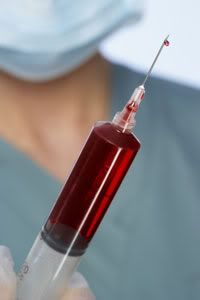
How can blood doping improve the performance of an athlete? Blood doping is an illegitimate method of increasing the red blood-cell supply in an athlete prior to engaging in competition. Oxygen is carried by red blood cells through the bloodstream, increasing red blood-cell supply would distribute oxygen throughout the athlete's muscles more efficiently, decreasing fatigue and giving the athlete an advantage.

How is it practiced?

There are many ways that blood is practice. One of the more common ways blood doping is through blood transfusion. According to mens Health: “A few weeks before a race these guys take about 14 ounces of blood out of their body and then freeze it. After this blood is extracted, the body senses that it’s missing and produces more blood to replace it,” says Dr. Wadler. “When it’s time to compete the body has replaced the missing blood, so then they put the blood that they extracted back into their body. They now have extra blood. Extra blood equals extra red blood cells.”(Michael Easter, Mens Health, The Science of Blood Doping, 2011). Another method is through “EPO”.“Athletes can also inject a drug called erythropoietin (EPO). “EPO stimulates your bone marrow to produce more red blood cells,” explains Dr. Wadler. “Typically your blood is about 40 to 45 percent red blood cells. EPO can increase that percentage to 50 percent or higher.”But come drug-testing time, EPO use can be easy to detect because it increases the ratio of red blood cells to the rest of the cells in the blood, such as plasma and white cells. To get around that, dopers will usually take smaller doses over time to avoid quick spikes in blood composition.Doping by transfusion is the most difficult to detect because it increases the amount of red blood cells and other cells, so the ratios are the same as a non-doper.”(Michael Easter, Mens Health, The Science of Blood Doping, 2011).


Why is it bad?

Simply put, blood doping is cheating, it gives an athlete an advantage over other athletes who went about their training legitimately and fairly. Along with the cheating aspect of blood doping, there are dangerous consequences that can cause damage to skin, eyes kidneys, and cause blood clots. When inserting blood back into any individuals body, you exposed to blood infections and ultimately heart infections.

How is it stopped?

When an athlete dopes up, their red blood cell density increases. These high levels can be detected by testing the athletes levels of hemoglobin. This happens through a process of urine testing.


Works Cited

http://www.kidzworld.com/article/1832-blood-doping-in-sports-athletes-cheating
http://blogs.menshealth.com/health-headlines/the-deal-with-doping/2011/06/01

Sunday, January 29, 2012

Stem Cells

What are Stem Cells? Stem Cells are cells that possess the ability to grow into almost any cell, granting much hope to medical advancement. An example of a situation where Stem Cells can be used is if neural cells in the brain or spinal cord become destroyed or damages, they can be replaced by stem cells. Thanks to Stem Cells, almost any dead cell can be replaced with new cells, this has resulted in mass funding of this field. Where do Stem Cells come from? The sources of Stem Cells can be very controversial. The three main sources of Stem Cells are from adult cells, umbilical cord cells, and embryonic cells. Adult cells may be obtained from either bone marrow or from the peripheral system. Since Stem Cells of adult cells are extracted directly from a patients body there is always a DNA match so the immune system of the patient never rejects them. Plus they are very abundant.
Umbilical cord cells are extracted during pregnancy and stored for future use on behalf of a new born. Beside usage on the infant, cord cells may be used on the biological parents of the infant. Cord cells may be used on others, but the more distant the relationship is, the more likely it is to be rejected by the patients antibodies. Just as there are common blood types, there are many cell types adding to the flexibility of Stem Cells, making it possible for cell donation. This source of Stem Cells is the richest, and most flexible considering that they can that they can be stored in advance for future use. In the case of non matching DNA between donor and recipient, scientists have come up with methods to increase transferability and reduce risks.
Embryonic Cells are extracted directly from the embryo. This is where the controversial aspect of Stem Cell research comes in. Embryonic cells are extracted from the embryo right before its cells begin to differentiate , at this stage it is A “blastocyst”. In a blastocyst there are about 100 cells, a very large percentage of these cells are Stem Cells. These cells can be kept alive indefinitely, where they can continue to double in numbers every 2-3 days. When a full replication of blastocyst cells occurs, you get what is called a “stem cell line” because all genetic material comes from the exact fertilized egg that started it. The controversy comes in with the embryo because it would require the destruction of it. Through the public eye, this can be seen as murder because it practices the destruction of human life. Science has come to defense with arguments explaining that a blastocyst -at this point- has no human features. With two other sources of Stem Cells that are less controversial and promising, why continue destroying life? I think it’s wrong. Of course it would be more of an exception if this was the only way to extract Stem Cells, but there clearly are more effictient ways. I strongly disagree with the embryonic side of the game, but I totally support the other two aspects.
source 1:http://www.herdaily.com/blogimg/health/Adult%20Stem%20Cells.jpg source 2:http://www.allaboutpopularissues.org/pros-and-cons-of-stem-cell-research.htm source 3:http://www.eurostemcell.org/files/images/Human-blastocyst.preview.gif

Thursday, June 2, 2011

Industrial Agriculture vs. Sustainable Agriculture

Have you ever sat down at diner and tried to figure out how a piece of cow “magically” became a piece of steak on your plate? We've all seen farm animals, whether it was when we passed by a farm or saw them on TV, but how does this food production thing work? There are two different answers to this : Sustainable Agriculture and Industrial Agriculture.


What is Sustainable Agriculture?

Sustainable Agriculture is a way of raising food fairly. It conserves and preserves, improves or sustains biodiversity, keeps animals safe, and keeps workers paid and treated fairly.One of the strongest characteristic of Sustainable Agriculture is its conservation and preservation side. When conserving and preserving, whatever is taken out of the environment is brought back. This makes resources like water and soil become replenishable and available for the future. Also, animals that are raised under Sustainable Agriculture are treated humanely and allowed to live freely and naturally. Another important characteristic of Sustainable Agriculture is its biodiversity. Farms that produce food in support of Sustainable Agriculture have a large variety of plants and animals spread across to keep soil rich, and to go with this positive factor pesticides are use very minimally . Personally I think that if the world became more optimistic to Sustainable Agriculture more people would find it more reasonable than the opposing system “Industrial” Agriculture. Although it’s more costly and inefficient it would put us and our environment in a lower risk.


Industrial Agriculture
Industrial Agriculture (AKA Factory Farming) is a said to be a more cheaper and efficient way to meet the worlds demands for food, than the opposing: Organic Farming(Sustainable Agriculture). This method uses the least amount of resources to generate the most profit, but this all happens at the expense of our environment and causes mistreatment to animals.Industrial agriculture also has a higher risk of disease spread and uses much more pesticides than Organic Farming. In this process our world becomes less bio diverse in exchange for money and profit.


Conclusion
If the world becomes less bio diverse species will begin to disappear, when this happens several other species that rely on that species will follow and be disappear too. Yes, we are told that Industrial Agriculture is fair and yes it is cheaper, but is it worth the cost of our environment? I think not. We must be more optimistic to alternatives such as Sustainable Agriculture even if it's a more costly and difficult process.

Wednesday, June 1, 2011

Designer Babies


What is a designer baby?


With the help of modern technology, doctors can now inspect embryos for diseases and illnesses. These embryos are later injected into a future mother to produce a healthy baby. Besides health concerns parents can now modify these embryos to eliminate unwanted genes and predetermine gender accurately along with several other attributes such as: height, blood type eye colour and hair colour.

How is this possible?

A procedure called IVF (In Vitro Fertilization) is used. In this process a woman is given fertility drugs in order to develop more eggs in her ovaries. A few hours later a needle is inserted into the woman’s ovaries to draw out fluid that contains her eggs. The eggs retrieved from the woman’s ovary are then mixed with sperm donated by the male partner and left in an incubator for 24 hours. During these 24 hours one of many sperm cells will penetrate the shell of the egg and begin fertilization, the cells will then divide and multiply becoming an embryo. These embryos are then inspected and selected according to the preferences of the parents. After a few days the selected embryo consisting of 8 cells will be transferred back into the uterus to form a pregnancy.

Is it right?

As a catholic the thought of designing my own child seems very unethical, the selection of several different attributes is unnecessary, it's sort of like we're playing God. But there's also a bright side to this practice, which is having the power to inspect an embryo for inherited illnesses and disease but even with that, this can expose our children to new unexpected illnesses.


All in all, some family's can find this very beneficial, especially family's with history of illness and disease but besides that we shouldn't turn “real life” into a game of Sims.


Sources: http://www.time.com/time/magazine/article/0,9171,989987,00.html

Marks Bio Blog:
http://biologysbi-3u1-04.blogspot.com/2011/03/designer-babies-should-our-babies-be.html?showComment=1306915567748#c228086132594120254

Philip's Bio Blog:
http://biologywaytogo.blogspot.com/2011/05/recreating-creation.html?showComment=1306916062994#c7386153869648231631

Monday, May 16, 2011

Something's Fishy...


Some people have large appetites, some people have eyes bigger than their stomachs, but when fish is brought onto the table our stomachs are larger than the ocean,this may sound silly but it's true! Our oceans can't handle the world's demand for fish, 1 of 5 people around the world are dependant on fish for protein, plus the millions around the world who use fishing as a source of income.


With fishing industries getting access to fish stock granted more than denied, it's extremely hard to prevent overfishing. Large fishing fleets take over the modern fishing industry and technology is improving rapidly giving these fleets incredible size and power.These ships are now able to locate schools of fish accurately, sometimes fishing out non targeted species and younger fish.


It's bad enough that the process of fishing is already faster than fish can reproduce but how can reproduction occur when the whole species is being wiped out (even babies)? These destructive fishing techniques have forced more than 70 percent of the worlds fishing stock to be either depleted or fully exploited.


Depletion and exploitation of targeted fish is not the only threat to marine biodiversity, we are also fishing down the food web.Fishing down the food web has many consequences, when we kill fish, we change the way organisms interact; dragging nets destroys habitats and a lot of bycatch is picked up, affecting marine biodiversity greatly.The loss of predators and larger fish changes biological interaction forcing larger fish to interact with smaller fish, this creates smaller species of fish. The food web then changes, making the ecosystems that once supported these organisms incapable of doing so, forcing them to either adapt or di


.


Life that was once present in these oceans have disappeared; abundant species are becoming scarce; predators are gone; even non targeted species fall victim. Although the world is on the verge of sucking the life out of the oceans, there is still hope! Strangely, we can reimburse our oceans. More so than land, the ocean can reset. If given time all the ocean's animals would return, all the organisms that have become smaller will grow back, all the relationships between organisms would rebuild, ecosystems would support all it's organisms again, but most importantly marine biodiversity would go back to how it was some 50 years ago... IT'S NOT TOO LATE!


References:
http://www.greenpeace.org/international/en/campaigns/oceans/overfishing/
http://www.greenpeace.org/canada/en/campaigns/Seafood/archive/threats/overfishing/
COMMENTS:

Mark Yabut's Bio Blog:
http://biologysbi-3u1-04.blogspot.com/2010/10/greenpeace-activists-stop-massive-oil.html#comments
Jerwin Lalata's Bio Blog:
http://jerwinbioblog.blogspot.com/2011/04/oceans-are-in-crisis-greenpeace-has.html#comment-form